Bespoke web design
Bespoke web design in Newport, drawn from a blank page.
Some businesses outgrow templates. If your brand, your offer or your customers need something more considered, we'll design a website around them from first principles, with a visual language that belongs to you and nobody else.


01Template or bespoke?
A good theme is fine. Until it isn't.
We'll always tell you honestly if a well-chosen theme would do the job. Plenty of small businesses don't need bespoke design, and we'd rather say so than sell you something you don't need. Here's how the two compare.
| Consideration | Theme-based site | Bespoke design |
|---|---|---|
| Starting point | A ready-made layout, adapted to fit your content | Your business, your audience and what you need to say |
| How it looks | Familiar to anyone who has seen the same theme elsewhere | Designed around your brand, so it can't be mistaken for anyone else |
| Content | Squeezed into the sections the theme happens to provide | Each page shaped around what it actually needs to do |
| Performance | Often carries code for features you'll never use | Only the code your site needs, which keeps pages lean |
| Changes later | Limited by what the theme allows | Built from reusable components, so new pages slot straight in |
| Best for | Simple sites on tight budgets and short timescales | Brands where first impressions and standing out really matter |
02What you get
Not just pages. A design system.
A bespoke project gives you more than a handful of good-looking pages. We put together a small, documented set of colours, type, components and rules, so every page you add next year still looks like it belongs.
- A colour palette with accessible combinations already worked out
- A type pairing and scale for headings, body text and the small print
- Reusable components: buttons, cards, forms, navigation and more
- Guidance on photography, icons and tone of voice
- Motion used sparingly, and only where it helps someone understand
Clean sans-serif for body copy, set for comfortable reading on small screens.
Measured on site
Card: image, title, one line
From the Oakline concept, a fictional joinery workshop
03Discovery
It starts with questions, not mood boards.
Bespoke work lives or dies on the discovery stage. Before we design anything, we want to understand your business well enough to argue its case.
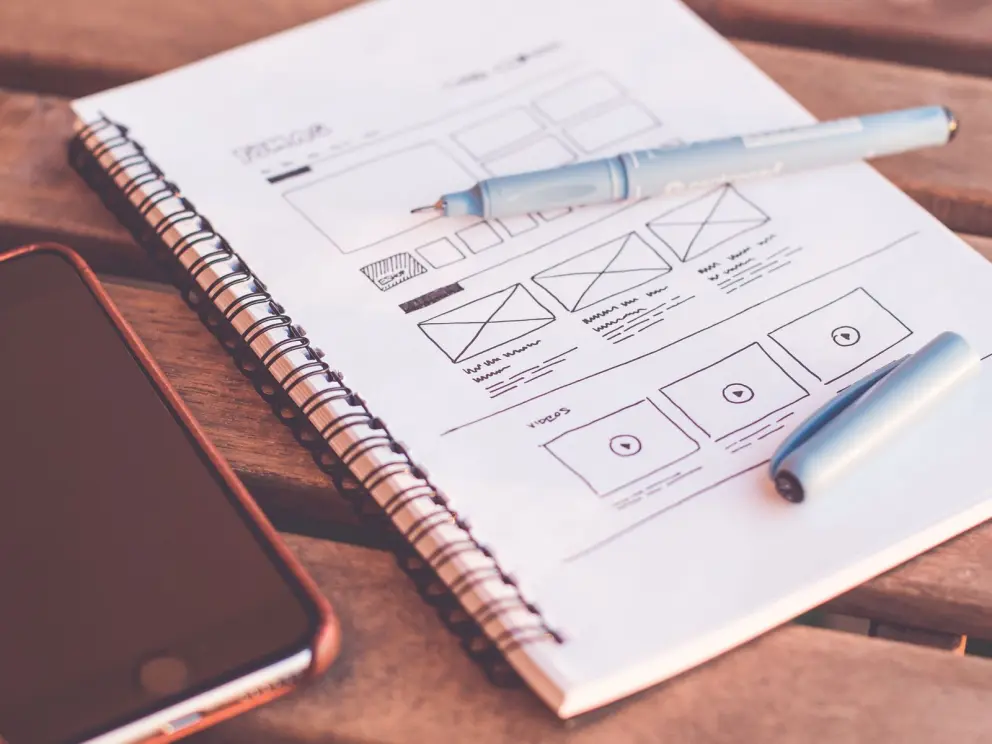
A working session with you
We talk through your goals, your customers, what sets you apart and what has held your website back so far. It happens over a video call, at a time that suits you.
Audience and competitor review
Who is choosing between you and whom, and what those other websites do well or badly.
Content audit
What you already have, what's missing and what can quietly go.
Style directions
Two or three visual routes shown on real page layouts rather than abstract mood boards, so you have something concrete to react to.
Prototype and refine
The chosen direction becomes a clickable prototype of the key pages, which we refine together until it feels right.
04Who it suits
Bespoke tends to pay for itself when...
-
Your reputation is the product
Practices, consultancies and specialist firms, where the website is often someone's first sign of how carefully you work.
-
The offer takes some explaining
Complex services, technical products, or several different audiences who each need their own route through the site.
-
The brand is already strong
You've invested in a logo and identity, and squeezing it into a theme would water it down.
-
You're planning to grow
New services, locations or features are on the horizon, and you want foundations that can take them without a rebuild.
05Same question, different answers
Two concepts that could have looked alike, and don't.
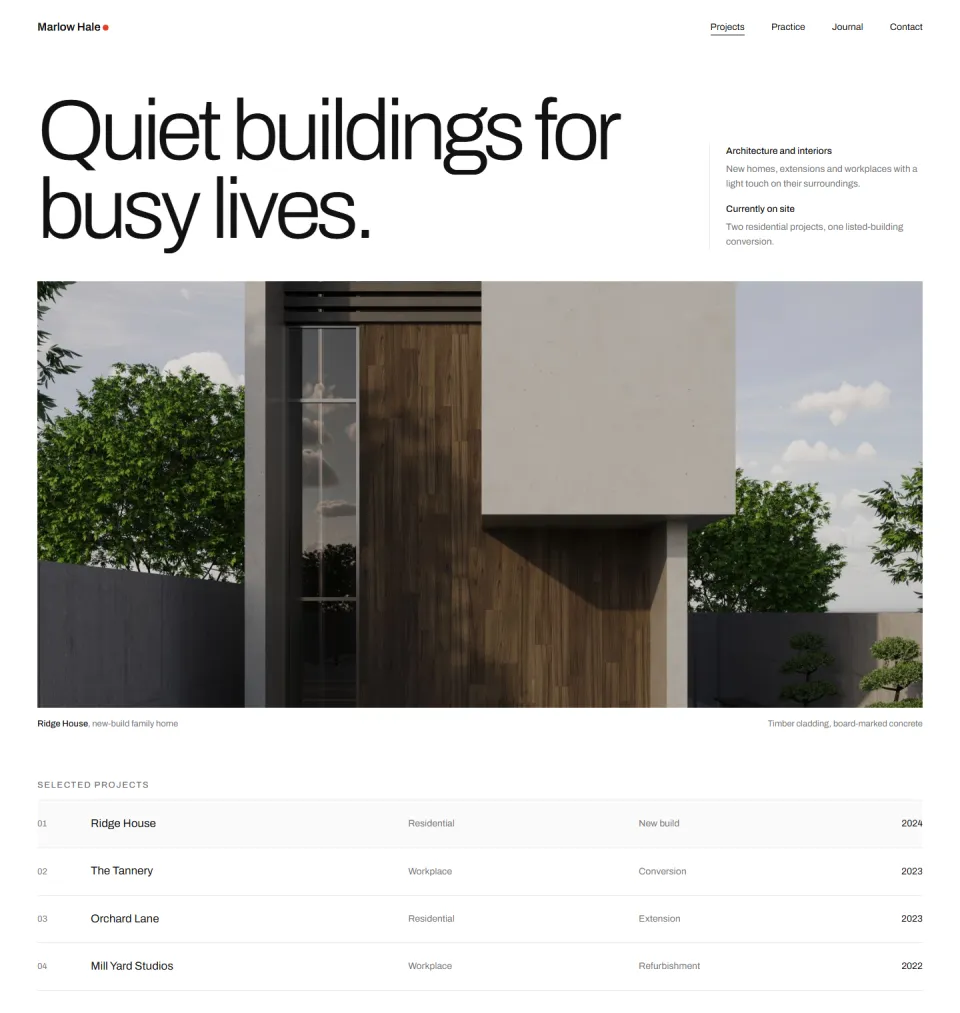
Oakline, a fictional joinery workshop, and Marlow Hale, a fictional architecture practice, both sell craft and care. Left to a template, they might well have ended up looking similar.
We pushed them in opposite directions. Oakline is dark, warm and photographic, with a handful of words doing a lot of work. Marlow Hale is pale, spare and typographic, letting the buildings take the attention.
That's really the point of bespoke design: the answer comes from the business itself, not from whichever layout happened to be the starting point.
See a real bespoke project06Bespoke design FAQs
Questions about bespoke projects
Tell us what you're trying to achieve and we'll give you a straight answer, even if that answer is a theme.
Ask usIs bespoke web design much more expensive than using a theme?
It usually costs more, because there's more design work involved. How much more depends on the size of the site and how many different page types it needs. We'll show you where the time goes in your quote, and if a theme would genuinely serve you better, we'll say so.
Can a bespoke website still be edited without a developer?
Yes. We usually build bespoke designs on WordPress with a custom theme, so the design is yours alone and the editing screens are set up around your content. Our WordPress web design page explains how that works day to day.
Do you need our brand guidelines before you start?
If you have them, please send them over. If you don't, that's fine. The discovery stage covers the essentials, and we can extend a logo into a fuller visual identity that works on screen.
Who owns the design once the project is finished?
Once the project has been paid for, the website and the design files are yours. You're free to keep using the design system with us or with anyone else in future.
How do you make sure a bespoke design stays accessible?
Accessibility is part of the design system from the start rather than a check at the end. We look at colour contrast, text sizes, focus states and keyboard use while we design, then test again once the site is built.
Related services
Other ways we can help
Start a bespoke project
Got a brand that deserves better than a template?
Tell us a little about your business and what you need. We'll come back with honest advice and a clear next step. No pressure and no hard sell.
Tell us about your project
It takes about two minutes. Fields marked * are required.